


The Faraway Fan
- Aug 18, 2017
- 3 min read
It can be a curious thing how a fan ultimately aligns themselves with a single professional team in any given sport. Often, fandom is passed down generationally: from parents to children, from children to grandchildren, etc – with each bound and united by fierce loyalty to a sporting club. For others, fandom is a matter of exposure and, oftentimes, a product of success—think the burgeoning non-Bostonian Red Sox population following their 2004 World Series victory (below).

For many, fandom is borne from proximity, where rooting for the hometown team develops from interest to infatuation. This unconditional allegiance to a team is founded on the fact that the city they wear on their jersey is your city. The “hometown” is your hometown. And even though your geographic location may change – and your “home” town along with it – for the true fan, that infatuation with your hometown team never alters.
My Seattle Mariners fandom came from being Seattle born and raised. Their hayday of the latter half of the 1990s and early 2000s coincided with my pre-adolescent youth, and my attachment to the team became more than just a geographic convenience. I rooted often, and I rooted loudly.

But as age, time, and circumstance changed, I am now no longer a “local” Mariners fan. My long-distance fandom has spanned three new cities—Boston, MA; Paris, France; and Nashville, TN—but my love of baseball and the Ners has never wavered. And I have found in my time rooting from afar, that fandom is often sweeter, and more binding, from a distance.
When I moved from Seattle to Boston for college, I was steadied knowing that the Mariners would play at least one series each season in Boston at Fenway Park.
In going to those few games a year at Fenway, I relished the opportunity to stand out as a fan of the Seattle Mariners. People I encountered and engaged with were surprised by my compass rose hat and Felix Hernandez jersey; mostly, they were surprised I hadn’t succumbed to the magnetic pull of Red Sox history and converted my fandom. My dedication to watching TV games only slightly waned, mostly because first pitch often happened a little after 10 P.M. East Coast time.
“Distance makes the heart grow fonder” is an adage typically reserved for long-distance relationships. But it aptly describes the tribal bond you feel with “your team” when you are so many miles away from their home (and my fandom can be considered a relationship on many accounts). Mariner games became a weekend event in Boston, as opposed to the often-casual summer nights spent at Safeco because the tickets were cheap and friends aplenty loved baseball. I savored every opportunity to watch the Ners do battle in someone else’s territory, to stand and celebrate alone in a sea of people shocked that a Mariners fan existed in the wild.
I spent the spring semester of my junior year in college studying in Paris. Incredibly, I found that, in those six months when study abroad overlapped with baseball, my fandom grew even deeper. I—kid you not—woke up at 4 A.M. in Paris to jump on MLB.tv to watch the Ners first game of the 2014 season. I was groggy, it was dark, but the victory and my silent cheering in a tiny apartment was glorious. The Mariners were a piece of home, a societal comfort knowing that, no matter where I lived (or live), I was (and still am) free to root wholeheartedly for my hometown and its baseball team.
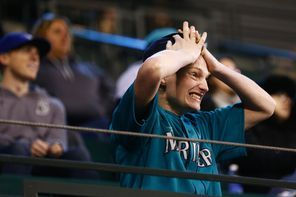
I think one of the hardest things to do is describe sports fandom to someone who isn’t a sports fan. The relationship feels vaguely like a parent-child union. There are moments of union. Moments of detachment. Celebrations and mourning. Even if geography gets in the way (or the late 2000s Ners break your spirit), the franchise is always there to provide the spectacle, and the fan will be there to savor the best and worst of all of it.
There is no greater gift in sports than fandom. Cheering shamelessly, yelling expletives at the TV or in the ballpark, and defending the good name of ‘your team’ are what make sports the inspiring hobby that they are. And no matter how far away you go, the fandom persists.


Comments